Barriers to young people getting the HPV vaccine
Young people and their parents don’t know enough about a vaccine which aims to protect against cancer and other serious health conditions, new research has found.
A project carried out in Stoke-on-Trent has also revealed that anti-vax sentiment and cultural and religious beliefs are also contributing to low take-up of the vaccine which is offered to pupils in high school.
Stoke-on-Trent City Council’s Public Health team enlisted VAST’s Community Health Champions (CHC) project to understand why more young people in the city weren’t getting the HPV vaccine.
The HPV vaccine helps to protect against human papillomavirus – a very common group of viruses which is usually spread through direct skin to skin contact, especially during sexual activity. Although not everyone exposed to it will develop symptoms or an infection, in extreme cases it can cause genital warts and cancers including cervical cancer, mouth cancer and cancers affecting the genitals in males and females.
Prior to the pandemic, the uptake of the HPV vaccine in Stoke-on-Trent was in line with the national average. However, figures have since fallen to 20 per cent below national average for both males and females.
Working with The Community Cast, Nicola Gratton Consulting and the Targeted Vaccination Programme from Midlands Partnership NHS Foundation Trust, four community conversation sessions were held with young people and parents to find out what they knew about the HPV vaccine.
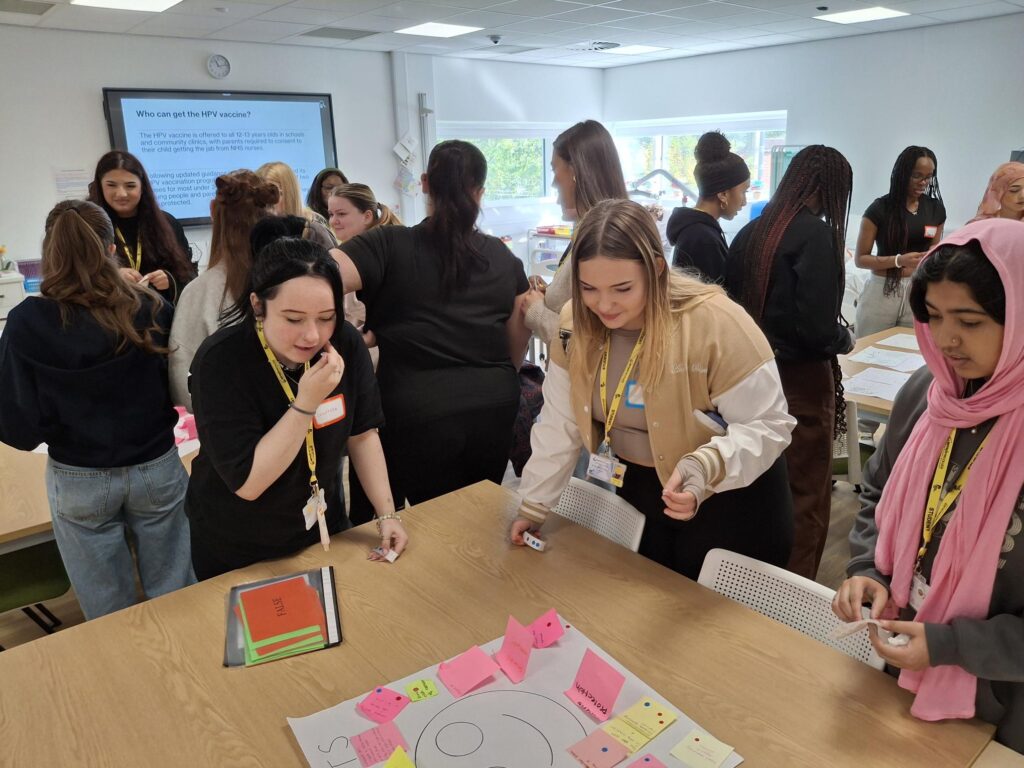
The sessions revealed that there were a number of barriers:
- Misinformation and anti vax sentiment; both parents and young people felt this had increased since Covid with young people saying people have become scared of vaccines since Covid.
- Awareness of HPV and vaccine benefits; parents reported high levels of information overload or that information was too complex or medicalised and meaning that the information was often overlooked or not fully understood. Young people were unaware of what HPV was, that it can affect both males and females and the vaccine is available to both sexes in schools.
- Cultural and religious reasons and stigma; Muslim young people said there were rumours that there was pork in the vaccine and so they would not be allowed to have the vaccine for religious reasons. Young people and parents mentioned that the association with sex would put some people off having the vaccine or consenting to their children having the vaccine.
- Other barriers included fear of needles and access to vaccines if young people missed getting the vaccine in school settings.
VAST Strategic Projects Manager Charlotte Bennet said: “This has been a really worthwhile project – the outcomes of which will now be shared with our growing network of Community Health Champions as part of our ongoing work around the importance of vaccines in preventing serious illness and disease.”
“We will also work with the recommendations to broker conversations with our communities and to build our relationships with local colleges, youth groups and football clubs to engage more young people in important health messaging.”
A project report has made a number of recommendations designed to improve the take up of the vaccine locally. These include the creation of myth busting videos presented by people from a broad range of communities which directly address their concerns as well as harnessing the influence of the City’s football teams to share important health messaging.
Other recommendations include:
- Adopting a longer-term approach to HPV and vaccine education with parent groups less likely to consent
- Targeted engagement in communities where take up is known to be lower
- Creating a platform through the NHS app where people can check their child’s vaccination status
- Review messaging and message channels for young people